Check our events page for the weekly selections
Beaune Imports
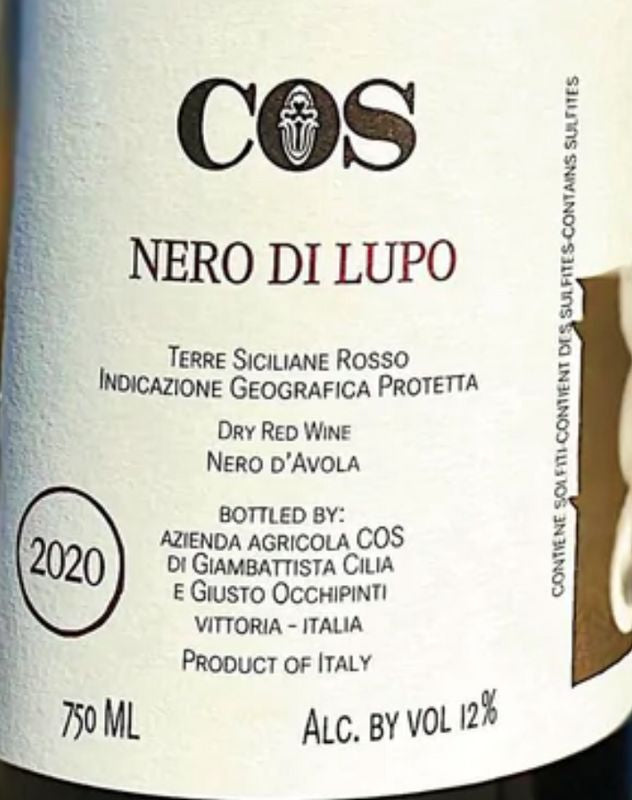
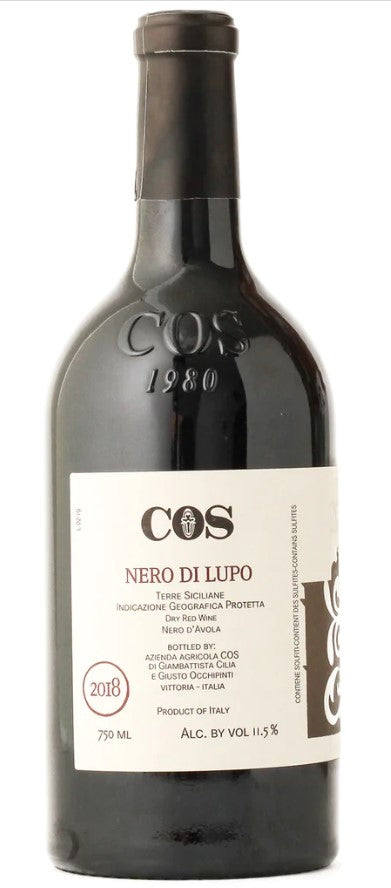
COS 2023 Nero di Lupo, Terre Siciliane
COS 2023 Nero di Lupo, Terre Siciliane
The Wine
This is the estate's version of Nero d'Avola, the primary red grape of Sicily. This wine is a wild-hearted Sicilian red howling with juicy vitality. If it rode a bike, it would be a Harley not a Moto Guzzi.
The wine enters the game with aromas of black cherry and plum skin, chased by violets, smoked herbs, and hints of baked rhubarb. There’s a savory undercurrent of fine leather, dried oregano, and volcanic dust, all of which anchor the fruit and hints at the sunbaked soils of Vittoria in the South of Sicily.
On the palate, it’s all tension and lift: juicy cassis and redcurrant meet crunchy tannins and a saline snap. The mouthwatering acidity gives the wine a kinetic energy that begs for grilled lamb or charred eggplant. There’s a rustic elegance here, not polished, but clearly intentional.
Fermented with native yeasts in open concrete tanks and aged without oak, the wine retains its primary notes - a purity of fruit and terroir. Prior to bottling, the wine was not fined and only lightly filtered. Vegan, of course, and bottled with just a homeopathic does of sulfur to keep the wine healthy on its way to America and beyond. The finish lingers with notes of blood orange zest and dried thyme, leaving you somewhere between the Sicilian coast and a wolf’s den at dusk.
Pair this wine with BBQ, grilled sausages, grilled lamb, charred eggplant +/or zucchini drizzled with good olive oil and dusted with herbs. As Sicilian dishes go, look for a good recipe for Pasta alla Norma, Caponata, Salumi and roasted red peppers with olives and marinated artichokes. Break out the TV trays and find an old episode of Detective Montalbano and you'll enjoy a little slice of heaven!
The Winery
Giusto Occhipinti of C.O.S. is one of the most important and influential producers in Sicily if not all of Italy. And though Giusto is at the Core of COS Winery, it was founded in 1980 by three friends, Giambattista Cilia, Giusto Occhipinti, and Cirino Strano - each friend contributing the first letter of their last name to creat the name of COS winery.
Their facility itself dates back to the 1880’s - a period in time when the demand for Sicilian wines was huge. Phylloxera had devastated many of the world’s top wine-growing regions but it had not yet reached the island.
Sicily has a long history of winemaking, dating back to the 8th century BC when the Greeks first planted grapes in the eastern part of the Island. But its reputation for top-quality fine wines is only recent! And COS was one of the producers whose wines showcased the potential of Sicily’s terroir and drew attention to the island, especially its ability to produce complex, pure and fresh wines - a style enhanced by their soils of limestone and red clay.
For Giusto, “the vineyard is like our life’s savings in the bank, so we must protect it”, which means they follow organic and biodynamic practices that support the health of the soil above all else. This has been true since their start in 1980, long before today's "Natural Wine" hipsters were even born. Vittoria's climate also helps their efforts - being warm and dry lowers the risk of unwanted mold and fungus.
As a goal, Giusto seeks to have the characteristics of the soil conveyed into the wines themselves. To that end, he did extensive research on aging vessels and eventually decided on a combination of:
- 440-liter clay amphorae sourced from Spain
- Large neutral botti
- And concrete tanks (used mostly for the Frappato).
Clay is slightly porous, like oak, but has the advantage that it imparts no flavor to the wine than even the large, neutral oak casks (Botti). All aging at the winery is done in one of these vessels. Stainless steel is used only for assembling wines prior to bottling.
Extended skin contact is used for many of the wines, the skins lending the wines a natural preservative that permits the use of less SO2, of which little or none is used during vinification and only minimal additions are added at bottling to assure the wine's long livelihood.
Share